
Team: Dr. Dennie Palmer Wolf, Dr. Steven John Holochwost, Hallie Lederer, and Haeun Moon

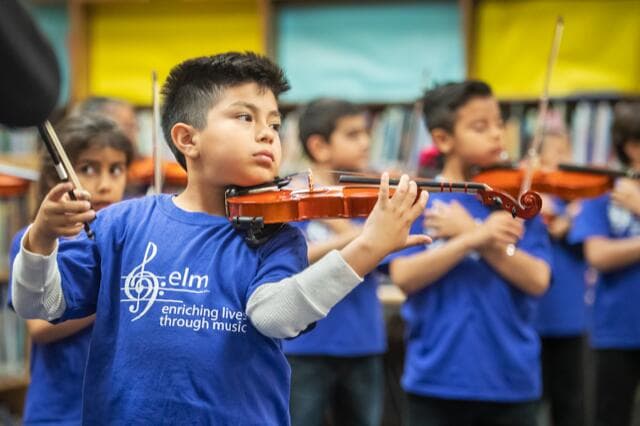
From 2015 to 2025, Carnegie Hall’s PlayUSA initiative supported community music organizations across the United States that provide instrumental music education to K–12 students, particularly young people whose opportunities to participate in music education are limited by socioeconomic, geographic, or other barriers.
To capture the work of PlayUSA partners and the lessons learned over the initiative’s 10-year history, Carnegie Hall’s Weill Music Institute partnered with WolfBrown to develop Making Waves: Bold Strategies for Community Music Education.
The report draws on the experiences of participating organizations to identify strategies, practices, and questions that can help inform the future of community music education.
Four Themes for Community Music Education
Sharing: Creating opportunities for music educators and organizations to pause, reflect, exchange ideas, and learn from one another’s practices.
Connectedness: Building networks of like-minded organizations that strengthen programs and support their work with students.
Responsiveness: Incorporating a wider range of musical traditions and responding to the interests, experiences, and needs of students, families, and communities.
Expanding Possibilities: Broadening definitions of what it means to learn and teach music, including opportunities for young people to shape their own learning and mentor their peers.
Together, these findings invite music educators and organizations to reconsider what young musicians are encouraged to do, how programs connect with their communities, and how teachers can create more expansive opportunities for musical learning.
The report also offers reflective questions to help community music programs assess their practices and consider new approaches.
Learn more about PlayUSA: Carnegie Hall’s PlayUSA program overview